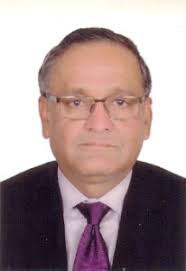
Author: people

  • Jammu and Kashmir: Yet again in world headlines

    Jammu and Kashmir: Yet again in world headlines

    By Dr. Mazhar Javed)

    Yet again, Jammu Kashmir dispute is making headlines; and like in past, for reasons that at best, can be described as very painful and regrettable.

    A few hours ago, the Indian Government announced the scrapping of Article 370 of its Constitution that allowed Jammu and Kashmir a special status. The development is of a serious nature with strong international law dimension and with implications for the regional peace and stability. That needs elaboration.

    Indian Occupied Kashmir, to which today’s Indian move relates, is an internationally recognized disputed territory. As such no unilateral step by the government of India can change this disputed status, as is enshrined in the United Council Security Council (UNSC) Resolutions. The inadmissibility of any ‘unilateral step’ in an ‘internationally recognized disputed territory’ is pivotal to the understanding of the issue. As the party to this international dispute, the government of Pakistan has said that it will exercise all possible options to counter the illegal steps.

    Besides, Indian move would be strongly opposed by the Jammu and Kashmir people, as it would run contrary to the spirit of the right of self determination promised to them through a ‘free and fair plebiscite’. Such illegal moves would never be acceptable to the people of Jammu and Kashmir and Pakistan.

    A day earlier, Pakistan had highlighted the importance of demographic structure of the disputed territory. This demography is important in the context of the plebiscite to decide the future of this disputed territory, as per the UNSC Resolutions. Any move to change the demographic structure of the occupied territory will be a violation of the these Resolutions which require the future dispensation of Jammu and Kashmir to be decided through a free and fair plebiscite.

    Today’s development came after days and weeks of a systematic squeeze applied on the people of IOK by New Delhi. Deployment of dozens of thousands of additional paramilitary forces; disconnection of internet services, suspension of Amarnath yatra and advice issued to Indian yatris, students and tourists to leave the occupied territory as soon as possible; people were being asked to stock food items and other necessary supplies; and petrol pumps were telling their desperate customers that they have no fuel to fill their tanks.

    To the people of IOK, this was a reminder of the weeks long blockade they had suffered around a decade ago. Measures taken by the Occupation forces were diverse and stringent. In most unambiguous terms, these measures reflected the certainty and large scale of public backlash that Indian move was sure to elicit.

    These developments are taking place against a backdrop of decades of brutalities against innocent civilians at the hands of occupation forces ;over 100,000 killings and blinding of hundreds and hundreds of youth by firing pellet guns straight in their faces. Many call it the first mass blinding campaign in the history.

    Decades long story of blood, bullet and brutalities have left the people of Indian Occupied Kashmir (IOK) with no hope of restraint by the occupation forces while using brut force against unarmed civilians. History tells us that such expectations are futile when it comes to IOK.

    It is these developments and this background in which the tweet of All Parties Hurriyet Conference (APHC) leader Syed Ali Geelani needs to be seen. In his tweet, which, he called an SOS call, the APHC chief said that “Indians are about to launch the biggest genocide in the history of Mankind”. His words are too alarming and too important to be ignored – by anyone in the world. These must be taken seriously and with a sense of utmost urgency. Luxury of inaction is simply not there.

    The UN Office of the High Commissioner for Human Rights (OHCHR), in its report released last month has documented these atrocities and reiterated its earlier recommendations viz ; immediately repealing the draconian laws that allow impunity to the Indian security forces ; and to set up a Commission of Inquiry (CoI) to look into the atrocities [already] committed by the security forces and to hold those responsible for these inhuman acts. The Office of the High Commissioner also reiterated its earlier demand of access for the UN mechanism into the Occupied territory.

    Another report “Tyranny of ‘A Lawless Law’: Detention without Charge or Trial under the J&K Pubic Safety Act” was issued by the Amnesty International in June this year. This report analyses in detail and exposes the Indian Public Safety Act (PSA) which provides impunity to the Occupation forces to commit human rights violations of massive scales.

    As I write this article just a few hours after the announcement in New Delhi, I feel an indescribable pain inside me when I think of my brothers and sisters in IOK. The whole world knows the ordeal that they have been facing now for decades; every day being worse than the previous one. No one knows what lies ahead for them; innocent men, women and children. What prevails in Indian Occupied Kashmir (IOK) today can at best be described as spiraling fears of atrocities and uncertainties about future and their future generations.

    While uncertainty prevails in the air all over IOK, history reveals one thing that is most certain. Any coercive measures including the worst use of brut force has not been able to suppress the indigenous freedom struggle. Any attempt to silence this struggle by raising the level of high handedness will be repeating a tried, tested and failed approach. Coercion has only strengthened the Kashmiris resolve to shed away the yoke of occupation.

    These developments are certainly a source of concern for all the peace and freedom loving people of the world. While rest of the world longs to climb up the ladder of stability and prosperity, regrettably this region seems to be rolling back.

    We need to move towards the resolution of this long outstanding dispute: for the sake of honoring our international commitments and promises made to the people of Jammu and Kashmir; for the sake of upholding international law and principles; for having full respect for human rights and for durable peace, stability and prosperity of the region and world at large. Illegal unilateral steps in an internationally recognized disputed territory are obviously and most certainly not going to help.

    (The writer is the ambassador of Pakistan to Nepal)

  • Why India attaches high priority to Nepal? Repeated visit of VIPs caste doubt

    Kathmandu, 6 August:  The political and diplomatic sphere of Nepal has felt a shift of India’s perspective towards Nepal immediately after the commencement of Narendra Modi’s second stint in office. The activities of Minister for External Affairs Jay Shankar has also substantiated that New Delhi’s   viewpoint has changed. Jay Shankar visited Bhutan on the third of assuming the office of South Bloc whereas he is paying a visit to Nepal three months later on August 21.

    According to Sanghu vernacular weekly, India wants to exhibit that Bhutan remains in the good book of New Delhi and its relations with Thimpu is robust and rock solid in comparison to Nepal. Prime Minister Modi too has manifested that he attached least priority to Nepal as he visited Maldives and Sri Lanka instantly after taking the charge of premiership for the consecutive second term.

    Indian political analysts argue that Nepal has fallen under the ambit of China and Indian media too have portrayed Nepal in the same light. The visit of Samant Kumar Goyel, Chief of India’s external intelligence agency, RAW and subsequent visit of BJP leader Subramanyam Swami to Nepal caste doubt what India wants in Nepal. The ulterior motives of India are unknown and our leaders never maintain transparency when they meet Indian leaders.

    People’s News Monitoring Service

  •   Community schools and Madrasas merged

    Kathmandu, 6 August:  Two hundred and ninety six community schools and Madrasas (Muslim schools) in Baridya have been incorporated in National Early Grade Reading Programme (NEGRP).The programme aims to strengthen the learning and reading skills of school children from grade one to three. Some 23 thousand school children in the district have been covered by the programme.

     The Bardiya UNESCO Club is allowed to implement the programme in the district, following its effectiveness in the neighbouring Banke district, according to the Education Development and Coordination Unit, Bardiya. The programme is presently implemented in 16 districts across the country.

    People’s News Monitoring Service

  • Committee formed to discuss controversial Guthi Bill 

    Kathmandu, 6 August:  A working committee of guthiyars has been formed in order to hold discussion among guthiyars over the guthi bill recently brought by the government as well as to run different programmes in this regard.

    A committee comprising different organisations of Newar Community elected Dr Maheshman Shrestha as president of the working committee and Pabitra Bajracharya as vice-president. Similarly, responsibility has been given to chairperson of Newa Dey Dabu, Naresh Tamrakar  to look after the secretariat.

    Nanikaji Shakya, Rabindra Tamrakar, Sabina Maharjan and Rishi Prasad Shrestha from Lalitpur, Shyam Shilpakar and Shanta Prakash Shrestha from Bhaktapur, Shreekrishna Manandhar from Tokha, Roshan Shrestha from Phampi Struggle Committee and Raja Shrestha from Saka Struggle Committee are the members of the working committee.

    Nepal Dangol and Ashok Maharjan from Khona Struggle Committee, Shreekrishna Shrestha from Kirtipur, Rajbhai Jaka:Me, Nanihera Maharjan, Suman Sayami, Rabindra Shrestha, Ganapati Lal Shrestha, Sujib Bajracharya, Umesh Sthapit, Bhagawan Shakya, Rameshman Piya and Suresh Kiram Manandhar from Kathmandu are also the members.

    Senior culture expert Satya Mohan Joshi, Durgalal Shrestha, Hitkarbir Singh Kansakar, Malla K Sundar, Dr Pushpa Raj Rajkarnikar and Chandra Maharjan are advisors to the committee.

    People’s News Monitoring Service

  • Olympic Committee elections announced

    Kathmandu, 6 August:  The election of Nepal Olympic Committee (NOC) is announced for September 6.  The NOC meeting has formed a three-member election committee to make necessary arrangement for the purpose.

    The committee comprises Radhika Khatiwada and Bhim Thapa as members.  Similarly, the special AGM of the NOC has decided to expand the strength of NOC working committee from 17 members to 19 members, according to NOC Chair Jeevan Ram Shrestha.

    People’s News Monitoring Service

  • Nepal Army to promote tourism!

    Kathmandu, 6 August:  Nepal Army (NA) is organizing various programmes aimed at making the Visit Nepal Year 2020 a success. The programme includes the historical Liglige running shield and United Nations Peace Keeping Seminar, among others.

    In an annual progress review meeting on Monday, NA Chief of Staff Purna Chandra Thapa shared that the NA was going to organize these programmes to make the government’s mission successful.

    The government has targeted to bring in at least two million tourists to visit Nepal in the year 2020.

    People’s News Monitoring Service

  • HoR finally forms inquiry committee

    Kathmandu,5 August: The obstruction in House of Representatives (HoR) has ended  after formation of a study and recommendation special committee under deputy parliamentary party leader of ruling CPN Subas Chandra Nembang.
    Speaker Krishna Bahadur Mahara has mandated the committee including lawmakers Dev Gurung and Binda Pandey of CPN, Minendra Rijal and Pushpa Bhusal of the main opposition party Nepali Congress (NC), Uma Shankar Argariya of Socialist Party Nepal and Laxman Lal Karna of Rastriya Janata Party Nepal (RJP) to forge consensus as per the Constitution, and established norms and values to end the obstruction and make the parliament effective.

    People’s News Monitoring Service

  • ‘Operate TIA round-the-clock’

    Kathmandu,5 August:The Nepal Association of Tour and Travel Agents (NATTA) has urged the government to operate the Tribhuvan International Airport with its full capacity.

    A team comprising NATTA’s office-bearers met with Minister for Culture, Tourism and Civil Aviation, Yogesh Kumar Bhattarai,  on Monday and urged him for the operation of TIA round-the-clock to manage the existing air traffic pressure at the only international airport of the country

    People’s News Monitoring Service

  • Gold glittering unprecedentedly

    Kathmandu,5 August:The price of gold continued to set a new record in the domestic market on Monday.The price of the yellow metal has increased by Rs 1500 and reached Rs 67,800 per tola, to set record an all-time high, according to the Federation of Nepal Gold and Silver Dealers’ Association .

    People’s News Monitoring Service

  • India pushing hard Nepal for Hindu state

    Kathmandu, 5 August: Major leaders of India’s ruling party BJP have been pushing Nepal to be reinstated as a Hindu state.

    According to Nagarik daily, Uttar Pradesh Chief Minister Yogi Adityanath has regularly been pushing for Nepal to be reinstated as a Hindu state mentioning that Nepal would have the support of India if it did so. He has been regularly saying that Nepal had to become a Hindu state as most of the population were Hindu. Foreign experts in Nepal are seeing this has India pushing Nepal to become a Hindu state.

    People’s News Monitoring service