By Our Reporter
The famous Gaikhura Mahadev Temple in Melung Rural Municipality is seeking donation to complete construction works of the temple as per the archeological design.
The Gaikhura Club, which is involved in construction of the temple, is trying to acquire ten ropanis of land around the temple premises. With the financial support of the Melung Rural Municipality, the construction works of the compound wall is at the final stage to complete.
There is a strong belief that personal wishes will be fulfilled after performing pooja at the temple. Located at 30 kms far away from the Dolkha district headquarters, the temple is a holly Hindu shrine. A large number of devotees visit the temple.
Author: people
-
Dolakha Gaikhura Mahadev Temple seeking donation
-
REGIONAL AFFAIRS: Instability mars Nepali politics; has Prachanda gone senile? Indian terror in South Asia doubles?

By NP Upadhyaya
It was definitely a black day for Nepal.
It was the day when an unwanted and uninvited Indian spy landed in Kathmandu, met the political animals close to the Indian establishment, advised and instructed them all to act as per his sermons or face punitive actions.
He may also have threatened, let’s guess, these political animals that their regular but secret remuneration could be stopped if they ignored the Indian terms and conditions.
He came, he tamed and then left upon completion of his assigned job which was to coerce Nepal through his posted men seated in Kathmandu’s political circuit.
The idea was to further tighten the Indian grip in Nepal in order to avert the Chinese increasing influence in Nepal.
The RAW agency, Research and Analysis Wing, is taken as the most dangerous and notorious terror machine in South Asia which is the brain child of the most arrogant and undemocratic lady ever the South Asian nations have had — Mrs. Indira Gandhi was the Prime Minister of India.
She ruled India with iron fist and kept the smaller neighbors under the spell of a constant threat or face the consequences as that of independent and sovereign Kingdom of Sikkim. She died a terrible death in 1984.
The annexation threat though continue even as of today.
Mrs. Gandhi was very much fond of teaching a lesson to her smaller neighbors, more so Nepal, as and when these smaller nations differed with her coercive political stances.
She taught a humiliating lesson to Sikkim through her planted man-Kazi Lendhup Dorjey. The traitor, as he is taken in Sikkim now, died an unsung death.
The RAW Chief landed in Kathmandu on July 20, 2019.
He was for three days only in Kathmandu but made the country politically unstable which is visible.
However, with the departure of the RAW Chief, Mr. Samanta Kumar Goyal, from Kathmandu accomplishing his “damage Nepal mission” with proper finesse, Nepal as a nation-state has suddenly become sensitive in that some surprising developments have taken place immediately after the departure of this questioning Indian national housed in the RAW central office in New Delhi.
Remarkably, the Nepali leader(s) groomed by New Delhi for a decade plus, Comrade Prachanda and Dr. Babu Ram Bhattarai of the fake people’s war that was in effect sponsored by the Indian regime in a calculated manner, was the one preferred political man with whom the RAW bloke, Samanta, spent much of his time in Kathmandu.
It was a unique meeting in that an Indian government official and that too from a dangerous alien agency that is taken as a swearword in the entire South Asian region, was meeting a Nepal Maoists leader (elevated by India itself) Prachanda.
Now one could guess as to how this Indian government official would have behaved with the one who was raised and groomed by the Indian regime itself during his political career? Master versus servant?
Certainly Mr. Goyal could have scolded Prachanda and ordered to serve India well as per his instructions or else the Hague Tribunal awaited the NOIDA dwelling Comrade.
This threat must have scared our hero of the Maoists led people’s fake war that it was.
He had carrot also for New Delhi elevated man-Prachanda.
The RAW Chief appears to have told Prachanda to keep Nepal politically unstable and weak so that India could dictate its terms to which Prachanda appears to have obliged.
For his continued service made in favor of the Indian union being inside Nepal, the visiting RAW Chief Samanta Goyal managed free tickets to the entire family members of Comrade Prachanda that included his “two” illustrious daughters and ailing wife Mrs. Sita Dahal, as well.
The fun was that the free tickets was as per the orders of the Indian detective Mr. Samanta Goyal, but talked to have been paid by the Nepal government including the free foreign currency that were needed for the Dahal family while enjoying pleasure in a world class hotel in Dubai, the capital of United Arab Emirates.
The Dubai four days trip must have been a heavenly trip for the Nepali political man whom the general population now have begun taking as a national burden and wish that the man who masterminded the killing of some seventeen thousand innocent Nepali lives be sent to the Hague Tribunal, Netherlands, and be tried for his crime committed against Humanity during the India engineered people’s war that was in effect a fake one waged only to capture power through the Indian helps and in turn serve the alien nation for the entire life.
The Indian foreign secretary Shyam Saran had picked up Prachanda from the crowd of many Indo-pendent leaders. Mr. Saran is simply brilliant in recognizing the saleable political commodities.
This is how Comrade Prachanda is being taken by the Nepali population barring a few who perhaps were his hangers on benefitting from his domineering role in the national politics though it is by default. It is the Indian blessing which is largely believed to have made Prachanda the one what he is today for the national politics.
So a trembling Prachanda, the Nepal’s Delhi man upon meeting the RAW Chief on July 21 morning and having been briefed (on how to carry the process of damage Nepal in installment) and then making a Royal trip to Dubai has very freshly “threatened” the former Nepali Monarch, King Gyanendra, that he will be “kicked out“ even from his government gifted residence in Nagarjun jungles if the former King pokes his nose to destabilize this republican order.
Question now come to the mind of the observers as to what may have encouraged former New Delhi trusted, tested and reliable man to pounce upon King Gyanendra upon his return from Royal trip of Dubai? Did he meet once again the RAW agency commanded by the second rung led by the presumed Christian followers, who may have told him to keep a close eye on Gyanedra’s moves? Or has Prachanda gone senile? Or he is scared of being sent to the Hague Tribunal as is being talked these days that the Tribunal was very much excited and interested in inviting this man who killed several thousands of innocent lives in Nepal.
The former Norwegian development minister Eric Solheim too must be held accountable as he was the one who encouraged Prachanda to keep the Nepali State unstable and weak.
It was in the news then that Norway had funded the Maoists party while they were in New Delhi with an aim to make the Maoists leaders adherents of Christianity (?). But this news remains yet to be authentically substantiated.
But in these days, Prachanda is being taken to task even by the commoners for his obscene remarks made on King Gyanendra just the other day. The majority of the population now see Prachanda as a man who has lost his common sense and the one who speaks when told to speak by others.
The puzzle doesn’t end here.
Just upon Prachanda’s return from Dubai’s luxurious trip funded by the Nepali State, it is Prime Minister KP Oli who has embarked on a Health Treatment mission to Singapore.
Oli’s Singaporean trip is talked to be paid by PM himself which raises the questions as to wherefrom the wealth the PM accumulated to foot the hefty bills of the Singapore Hospital wherein he is to treat his swelling and almost non-functioning transplanted Kidney(s)? We wish him speedy recovery though as a modest Nepali national-Ed.
PM Oli by this time is one of the richest communist in Nepal, however, his source of income remains yet unknown. Though he owns two posh bungalows in Balkot, Kathmandu but how he built these two building remains a mystery. This is good news yet.
PM Oli comes from Jhapa district who had a very modest beginning in the childhood days, we have been given to understand.
Flying rumors suggest that PM Oli is to meet King Gyanendra in Singapore. The King is talked to have been invited by Beijing whose transit is Singapore.
Strong rumors have it that though the King may not leave the country for Beijing, however, what is for certain that China too is feeling the absence of a reliable partner in Nepal which used to be the Nepali monarchy since long upon whom China reposed trust unconditionally.
Now that the monarchy has been uprooted from Nepal (China too must be blamed for the overthrow of Nepali monarchy in many more ways than one) and China concludes that all the present day Nepali rulers were inside the pocket of New Delhi and thus China is also thinking to restore the lost Nepali monarchy which could be as usual its reliable partner in Nepal.
But will King Gyanendra trust a China that ditched him at a time when he needed Beijing’s support most?
China can never be a reliable partner of Nepal. Look the Lipulek, the Nepali landmass, invaded by India and China secretly in 2015. Nepal needs China just to balance India. And that’s all.
To recall, it was King Gyanendra’s extra initiative taken that brought China as an “observer” into the SAARC regional body which was disliked by the cursed Prime Minister of India Dr. MM Singh who in lieu brought in Afghanistan.
Having said all these, reports suggest that India and China have come to a conclusion that a stable Nepal was in the interest of both the warring rivals and thus together wish the Nepali monarchy to be restored.
India in addition, wants King Gyanendra back in Nepali throne as the lone Hindu monarch in the world as the ruling party in India, the BJP is out and out a fundamentalist Hindu party. India simply prefers a Hindu monarch in Nepal and for this the Uttar Pradesh Chief Minister Mr. Aditya Nath Yogi is hell bent on declaring Nepal once again as a Hindu state.
Chief Minister Yogi refers the Hindu monarch unconditionally and the King too is talked have been in close contact with the Chief Minister Yogi.
Be that as it may, the RAW Chief’s secret trip last month to Kathmandu was, among many other political conspiracies, to abort the Chinese President’s likely Nepal visit this year end.
The fresh visit made by a BJP man in Kathmandu, also hint that he was in Nepal to build opinion for aborting Chinese President’s Nepal visit.
He almost ordered Nepali political parties to rewrite the present constitution and mention in clear terms that Nepal was the most special friend of India and that Nepal-India friendship be taken as a special one.
The fact is that the word “Special” is allergic to the majority of the Nepalese population in that nothing of the sort of “special” exists in between Nepal and India which is a proven fact.
Yes it is special just for imposing Economic Blockades on Nepal as and when India prefers to teach a lesson to its smaller neighbor whose most of the ruling leaders were talked to be politically indoctrinated by the Neighbor in the South.
The arrival of the BJP functionary in Kathmandu and his lecture at the Hotel Himalaya was a deliberate act to add some new political constituencies in Nepal which could be used at critical times in favor of India. The chaos in Kashmir now, for example.
The BJP ploy appears to have worked as was expected. Some Indo-pendent minded intellectuals have already subscribed to the dangerous views expressed by the BJP Lathait.
However, these intellectuals do not speak as and when Indian dams built along the Nepal-India borders inundate Nepali villages. This speaks of their submissive mentality. However, we do not have any grudge as it is their democratic right to express their feelings, but yet what should hurt us all is that why some qualified brains ignore the immense pains caused to their own motherland by the regional bully which borders Nepal in the South? This is simply puzzling.
As if the Indian atrocities were not enough, Nepal is once again set to greet the one Indian national who is the main man behind the most imposition of the most inhumane Economic Blockade on Nepal in the year 2015 which came close on the heels of the great earthquake that had hit Nepal the same year. That was a penal action taken by a Hindu country against yet another ancient Hindu country Nepal.
Yes that Indian bureaucrat being a staunch BJP Card holder has now been elevated to the rank of the foreign Minister and this lanky persona is coming to Nepal shortly perhaps with some “ugly designs” that may not of the liking to the majority of the domestic population.
He is S. Shankar whose notoriety we have already witnessed during the last blockade. He perhaps meets his subordinates and serve some sermons and tells his men in Kathmandu to obey to the orders as lectured by him. This is perhaps his itinerary this time in Kathmandu.
Now a little about the emergence of calculated chaos in the Kashmir valley initiate by the Indian establishment.
With India scrapping article 370, the status of Kashmir valley has suddenly become different which apparently goes against the wishes and preference of the Kashmiri Muslims residing in the valley since decades and decades.
The scrapping of the Special status of Kashmir valley also has irked the Pakistani establishment which summoned the Indian High Commissioner to Islamabad to register the country’s “unequivocal rejection” of India’s decision to scrap a special status for India-administered Kashmir, simultaneously ramping up efforts to mobilize international support against the move.
“[Pakistan’s] foreign secretary conveyed Pakistan’s unequivocal rejection of these illegal actions as they are in breach of international law and several UN Security Council resolutions,” read a Pakistani government statement released after Monday’s meeting, writes Asad Hashim for the Al Jazzera, August 5, 2019.
In an another article penned by Alex Ward for the VOX, he says, “India’s government has made a controversial move to usurp power from the nation’s only Muslim-majority state, potentially igniting unrest in one of the world’s most dangerous nuclear flashpoints.
Alex Ward further claims in his article titled India’s risky Kashmir power grab, explained”
That the present move carried out by the Indian Union was a move to be a part of Narendra Modi’s Hindu nationalist project.
The Indian government says that with the recent move, J&K will turn from a state to a union territory which would mean that India’s central government in New Delhi will gain much more control over the area’s affairs.
New Delhi is also considering splitting parts of J&K into two federal territories: the new state of Jammu and Kashmir, which will get its own legislature; and Ladakh, a remote and mountainous area that won’t get a legislature adds Alex Ward.
To recall, the Kashmir conflict is more than 70 years old.
The conflict in the valley continues since the days when India and Pakistan became independent nation after the British rule ended in this part of the world except Nepal which has remained ever a sovereign country till to date.
After Partition in 1947, the then ruler of Kashmir, King Hari Singh could not decide whether to have his Muslim-majority region join India or Pakistan?
However, in 1948, the UN called for a “plebiscite” to occur after the region was demilitarized, in order to determine the future status of Kashmir which never materialized.
Since then Kashmir’s status has remained unresolved. The region has also triggered multiple wars between India and Pakistan making the smaller nations of South Asia politically unstable since then.
The danger is real in that both India and Pakistan are nuclear countries.
In the mean while the Amnesty International, August 4, 2019, has said that “ the unilateral decision by the government of India to revoke Jammu & Kashmir’s special status without consulting J&K stakeholders , amidst a clampdown on civil liberties and communications blackout is likely to increase the risk for further HR violations and inflame tension”.
A Swedish Professor of the Indian origin Ashok Swain writes in his Twitter account August 5 that “Those claiming that the scrapping of Article 370 will integrate Kashmir with India should know that the Article 370 is the one which was integrating Kashmir with India. Without it accession has become as Occupation”
Now that Kashmir has been thrown into a permanent chaos, it remains yet to be seen as to how the US President Donald Trump reacts. Also how his administration takes the entire development in the South Asian region will have to be watched.
Professor Shri Dhar Khatri talking to a Nepali media outlet claims that Indian action on Kashmir which has been recognized by both India and Pakistan as a disputed territory and thus India’s unilateral action/decision could be a matter of international concern and thus could be debated.
Some Nepali observers believe that India may have taken this swift decision on Kashmir fearing President Trump’s mediation in Kashmir affairs which may bring in the issue to the International table ( that it has already been) and may enhance the prestige of Pakistan and its new Prime Minister which by implication would mean that Modi’s international rating has gone down.
It is this fear of President Trump’s ruptured mediation talks which prompted India to take this unfortunate decision that contains the seeds of greater conflict in the region.
Kashmir continue to be the flashpoint in South Asia. India in many more ways than one has hinted its “inner designs” were not that sacrosanct for the entire region itself. But for some known and unknown Lendhup Dorjes’ (traitors) in our own vicinity they have reasons to celebrate.
For the Road: Two recent developments probably pushed the Indian government to act now, so writes MICHAEL KUGELMAN, AUGUST 5, 2019, (4:47 PM).
Kugleman is the deputy director at Asia Program and South Asia and a senior associate at the Wilson Center. He mainly writes on South Asian affairs except Nepal, Bhutan, Sri Lanka and Maldives.
The first being the U.S. President Donald Trump’s offer to mediate the Kashmir dispute.
And the second, adds Michael Kugleman that being the “rapidly progressing Afghanistan peace process, facilitated to an extent by Islamabad, which could lead to an eventual political settlement that gives the Taliban a prominent role in government.
Each of these developments strengthens Pakistan’s hand, so assesses Kugleman in his fresh write up in FP (Foreign Policy) dated August 5 afternoon.
“Making a dramatic move on Kashmir enables New Delhi to push back against Islamabad. It also sends a strong message to Washington about New Delhi’s utter lack of interest in external mediation”, concluded Kugleman.
He claims that New Delhi’s crackdown could send the region spinning into instability.
After gulping Kashmir, is it Nepal next?
A word to the domestic Lendhup Dorjes’ : Maryo Tyo Jasley Birsyo Desh Ko Mato! -

Important records not with the government
By PR Pradhan

The record keeping system of the government is very poor. Also, there is no effective mechanism for keeping important government documents safely for reference in the future. Forget about office copy of the citizenship certificate or office copy of any private company of any individual, the government has not been able to keep safely the records of confidential and important documents related to the nation’s affairs as well. It is believed that the government has no records of the 1950 Treaty and also no official map of the nation locating Nepal-India international borders. It has been reported that in many part of the country, the government and Guthi land have been captured by individuals, as the government was unable to keep their records properly. The MPs are continuously questioning to the government that how much land the government owns nationwide, the government authorities have not been able to give an answer to the MPs.
By taking benefit of such a poor government mechanism, some ill-intentioned people – from political leaders to top ranking bureaucrats and brokers — are found capturing the government property and sometimes also private property by abusing authority.
Specially, since the introduction of multi-party democracy, or say, the institution of monarchy became just a constitutional organ, the trend of exploiting the government property accelerated. Say, all the essential government organs to run the nation were destroyed. The process of destruction was started by power greedy political leaders like Girija Prasad Koirala and other leaders gave continuation to the trend established by Koirala and his near and dear ones. Late Koirala played a significant role in destroying all the government undertakings running in profit. The Royal Nepal Airlines Corporation was ruined for the personal benefits of the Koirala family. We cannot forget the Tanakpur episode which Koirala had inked, saying that was just an agreement. Later, it was confirmed that it was a treaty, not an agreement and the Parliament had to endorse the treaty. Girija Koirala went to that extent to sign the treaty which was not in the interests of Nepal. Later, the very agreement was modified and signed as a treaty between the two nations on sharing water and electricity from the Mahakali river.
During that time, the Nepali ministers were saying that after operation of the Mahakali project, the Nepali currency’s purchasing capacity will be double than the existing Indian currency. The Mahakali project is yet to start its construction works.
Just read two books on foreign affairs of Nepal – Parastraka Patra (Actors in the Foreign Affairs) and Nepalko Kutnitik Abhhyash (Diplomatic practices of Nepal). The first book is authored by former foreign secretary and former ambassador Dr Madan Prasad Bhattarai and the second one is a compilation of different ambassadors’ experiences by journalist Bishni Risal. Both the books give the impression that the foreign ministry under the monarchial era was very influential, prestigious and strong. Some ambassadors have even explained the excellent record keeping system in the Royal Palace.
What is the definition of honesty in today’s Nepal, it is difficult to explain. Only three percent of works remains to be completed in the much awaited Melamchi drinking water project. No need to explain that why the Italian contractors quit the project at the final stage as we have already talked much about that in previous columns. Now, to complete the remaining three percent work, with the cabinet approval, the government has decided to assign local contractors through contracts and not going by the tender process. Those former Maoist cadres have been rewarded with the contracts. These all have been done to escape any possible investigation from the Commission for Investigation on Abuse of Authority (CIAA). However, we cannot expect strong investigation from the present team of CIAA, as it is functioning as the sister organization of the KP Oli government, even though, to escape any possible investigation by CIAA in future, the government has encouraged intentional corruption by endorsing such controversial projects from cabinet decisions.
Meanwhile, in the interests of the contractors, the government has amended the government regulations. The amendments have enormously benefited the construction contractors to escape their company’s name from being black-listed. Just recently, the CIAA is said to be studying the cases of construction contractors who have not been able to complete the projects on time and also failed to maintain quality and standards. The recent amendment by the government has given a big relief to those construction contractors who have already failed to complete the projects. As per the new amendment, those construction contractors will get another one year to complete the respective projects. -

Fire and Ice
 The liquidity in Nepali politics is in proximity to flood-lines. Tongues start wagging when Prime Minister K. P. Oli goes to Singapore. This is especially so when the trip coincides with a private R and R trip that the other NCP-NCP chairman affords to Dubai. Tongues start wagging again when comrade Prachanda cut shorts his sojourn, returns to Kathmandu and, of all the things, pours his ire on the ousted king. The former king as private citizen has done nothing or said nothing out of the ordinary in the meanwhile. He has, as has been the case all along since his ouster, met his former subjects, made statements and published a collection of his statements. This, he has been doing all along. It just so happens that, this round, he met some luminaries whose tongues have been wagging in the alternative media. The meetings set their tongues wagging and that is what he has done. Going through their statements on the tete a tete the king has said nothing different from what he has been saying all along. The difference this time is that those who the king met came back improving their image of the king because he met them and preferred to state this to the media in their advocacy of options to the current scheme of things. Comrade Prachanda, the fiery one, found this enough to threaten that the king may not even be given space in Nagarjun. For those of us in the know, Pushpa Kamal needs know legal or constitutional excuse to pursue his threat. He is after all among that select coterie of neo-feudals who needs no law to pursue his threat. He is the law.
The alternative media defies the virtual monopoly of silence on activities that our feudals deem unsuitable for the current dispensation. When currently popular luminaries are asked of their meetings with the king, they are merely gauging the popular mood well. They have gone viral. The publicity has served the king well. This has hurt the fire fuelling the republic and the fiery one must assert his fire. Sadly though, he has only served the king well. Prachanda has nothing to show the people the reasons why he is pouring his ire on the king, instead, he is proving his ability to bew above the law. But this is not all. Pushpa Kamal has exposed his agitation for reasons that there are very many reasons he must breathe fire. He is chairman of a party that holds overwhelming stranglehold over the polity but there are rumors that his government’s deputy prime minister also met the king. Those who met the king, moreover, do not echo the picture his revolution painted of the king. Those who the king met wagged their tongues no doubt but painted a picture they don’t of Prachanda. This is enough to strengthen the king for Prachanda. He must thus growl for space, But, unfortunately for the fire, the response is ice and popular reaction pours. Yes, the flood season appears only now approaching. After all, for how long the liquidity? -

From Far & Near
BY SHASHI MALLA

• India Revokes Kashmir’s Special Status *
India’s Interior Minister Amit Shah – the brains behind the radical right-wing Bharatiya Janata Party – announced the revocation of disputed Kashmir’s special constitutional status with a presidential order. There was an uproar in the lower house of parliament, and in Kashmir itself there was a severe security lockdown that kept thousands of people inside their homes.
[We will be following this development closely because of regional ramifications. Please check our website: www.peoplesreview.com.np]
• Amidst Major Gun Violence, Trump Again Betrays Constitution & American People
Over the last weekend, there were horrific incidents of gun violence [for the umpteenth time] in the US cities of El Paso, Texas and Dayton, Ohio carried out by radicalized young white males.
In an address to the nation, President Donald Trump did not rise to the occasion. Instead of hitting the nail on the head – promoting legislation to curb radical gun violence and to finally stop his own extremist rhetoric – he blamed violent video games, mental illness, the internet and a culture of violence in the country for the terrible shootings.
[We will also have an update for this evolving situation in the build-up to the 2020 presidential elections on our website]• Afghanistan: Beginning of the End? *
Last Saturday, a fresh round of US-Taliban “peace” talks started in Qatar’s capital Doha. Officials described these to be the “most crucial” phase of the negotiations to end the 18-year war in Afghanistan – the longest for the United States!
Senior officials said “a peace agreement” could be expected at the end of these 8th round of talks between the diehard enemies and could enable foreign forces – both American and allied – to be withdrawn from the war-torn country – a so-called ‘peace with honour’. About 20,000 troops, most of them American are now in Afghanistan as part of a US-led NATO mission to train, assist and advise Afghan forces.
ZalmayKhalilzad – a U.S. Citizen of Afghan descent – the US ‘peace envoy’ for Afghanistan, who has held many meetings with Taliban leaders since last year, on reaching Doha to resume talks, claimed: “We are pursuing a peace agreement not a withdrawal agreement”, on Twitter. He added: “A peace agreement that enables withdrawal. Our [U.S.] presence in Afghanistan is conditions-based, and any withdrawal will be conditions-based,” amplifying that the Taliban were signaling they were ready to conclude an agreement.
Khalilzad made the astounding and unbelievable claim: “We are ready for a good agreement.” Sources with knowledge of the talks said an agreement on the withdrawal of foreign forces in exchange for security guarantees by the Taliban could be expected before August 13 (Reuters).The hardline Islamist Taliban militant group now controls more territory than at any point since the United States bombed them out of power in 2001.
With momentum apparently building for a breakthrough in bilateral talks, most Afghans whose lives have been overshadowed by war and raging violence on a daily basis, are candidly skeptical any deal will bring them peace. Ordinary people, as well as government officials genuinely fear that the US, in its unseemly haste to exit its longest war, is rushing for a deal that will see the rabid insurgents regaining some level of power in Kabul in the short term – and absolute power again in the long run.
A psychology student at Kabul University echoed the general sentiment: “We cannot trust the Taliban and their commitments because they were cruel and oppressive in their regime,” (AFP).They were seeking a monopoly of power that was unacceptable to the majority of Afghans. Especially their commitments to working women and the education of girls were not genuine. America was, in fact, giving the impression of “running away” and ceding Afghanistan to the Taliban, throwing into doubt the countless hard-won gains for ordinary Afghans.
US President Trump has gone weary and lost interest in Afghanistan, and is not cognizant of the adage “ more haste, less speed” [i.e. success in the performance of an activity, rather than rapidity of movement] as he is too inexperienced, fickle and unknowledgeable in foreign affairs.
Trump is, therefore, unaware that his administration has manoeuvred itself into a corner – no more and no less than a policy of appeasement. A so-called Afghan ‘peace with honour’ will turn out to be ‘Trump’s Munich’.
Any neutral observer could tell him that:
the US were making too many concessions, without corresponding ones from the Taliban
troop withdrawal should be done phase-wise
the legitimate Afghan government must be fully integrated in the peace/withdrawal process, otherwise it’s a farce
the regional powers – China, India and Pakistan – must be part of the solution, including in peace-keeping operations
a role for SAARC must be explored, after all Afghanistan is in the western periphery of this regional organization.• Route for Improved US-Iran Relations/ Background of Enigmatic History *
A former prominent American go-between has made novel suggestions to improve US-Iran relations in the context of the ‘no war and no peace’ tense scenario in the region of the Strait of Hormuz.
Franklin T. Burroughs lived and worked in the Middle East for more than 15 years. He served as consultant to the prime minister in Iran, and represented the ruler Mohammad Reza Shah as personal representative to US President Jimmy Carter. Later, he was adjunct professor at John F. Kennedy University in California.
As Shakespeare wrote, ‘what’s past is prologue’, and Burroughs sketched in “The Hill” why Iran cannot trust the United States: “the inconsistency of [US policy toward Iran] during and since the Jimmy Carter Administration has proved, at times, detrimental to Iran.” Initially, President Carter praised the Shah and declared that under his leadership Iran “was an island of stability in one of the more troubled areas of the world.” However, he then changed course and refused to be in touch with the Shah and ignored the Shah’s proposal to back the democratic election of an Iranian prime minister and the possible establishment of a monarchy on the British model. Burroughs served as the Shah’s personal emissary in this regard. This is one of the great ‘ifs’ of modern history – what might have happened [and above all not happened] if Carter had been more receptive!
In fact, as Burroughs reveals that the US had extensive contacts with Ayatollah Khomeini even before the Iran revolution. Above all, the Carter administration – crucially and strategically – aided Ayatollah Khomeini’s return to Iran by preventing the then Iranian military from launching a military coup. Pivotal roles and back-door diplomacy were played by US General E. Huyser, Deputy C-in-C of the US European Command in Germany and US Ambassador William H. Sullivan in Tehran and “helped ensure the success of the Islamic Revolution and the establishment of the Islamic Republic.”
After decades of troubled bilateral history, under President Barack Obama tensions between the two countries began to thaw, and in 2015 after years of negotiation, the Western countries, EU, Russia, China and Iran signed the nuclear agreement. The normalization of relations seemed possible.
Unfortunately, President Trump dashed all hopes in this and other matters. Without rhyme or reason and (mis)guided by his irrational loathing for Barack Obama and his legacy, he withdrew from this agreement [and other landmark international agreements, including the Paris climate accord], and in retaliation Iran has started to breach the uranium stockpile limits laid down in the agreement. Sundry incidents in and around the Strait of Hormuz have escalated tensions.
Burroughs suggests the sincere application of public diplomacy to break the impasse. Trump has to start by immediately ending “the use of negative and belittling language when talking about or to Iran” [as he did with Kim Jong Un of North Korea]. On the other hand, “socially correct and diplomatic figures of speech” could work wonders.
Trump has also to be less overwhelmed by Saudi Arabia and other Gulf monarchies and show more respect for Iran and its historically rich civilization. This also entails recognizing Iran as an important regional power – on par with, if not greater than Saudi Arabia. Iran has already indicated – subtly and overtly – that it is more than ready for fresh negotiations. The European powers must act resolutely.
If Trump remains obstinate, Europe and the world at large can only hope to prolong the status quo, until the American people rid themselves of a charlatan and rogue in 15 months time.• China’s Long March to Affluence *
Chatham House/The Royal Institute of International Affairs (RIIA) in London is “an independent [research and] policy institute with a mission to help build a sustainably secure, prosperous and just world.” In the latest issue of its journal “The World Today” [the current issue is open-access], Yu Jie, a senior research fellow, has written a succinct and fascinating account of China in the past hundred years in order to illuminate the challenges of the immediate future.
Yu concludes that in order for China to sustain it’s quest for global pre-eminence, leader Xi Jin-ping must base his policies on “on an innovative reading of the past and a belief that shared prosperity is not only essential for China’s development but, more importantly, is the only means to maintain the [Communist] party’s legitimacy and ensure its survival.”
By the way, this lesson should be of great import to our Nepalese comrades too!
• China’s One-Party State May Shape our Future *
Also in the current issue of “The World Today”, Rana Mitter, Professor of the History and Politics of Modern China at the University of Oxford explores the ways and means how China can change in the future, and the specific role of the Chinese Communist Party (CCP) in this process.
On the home front, the CCP promotes “socialist values” which forms the basis for an ever-expanding “Chinese Dream”. Abroad, China’s “nexus of economic, political and military influence is framed by the idea of a ‘community of common destiny’. Deng Xiaoping’s ascendancy in 1978 marked the beginning of remarkable economic development, rising global role and robust authoritarian public affairs.
Mitter explores how realistic it is to presume that the People’s Republic of China will maintain its momentum over the next 30 years until it marks the centenary of its foundation. He is of the opinion that this is possible, but only if it changes: “China will need to embrace economic and social openness in a way that it is still reluctant to do.” He is quite upbeat in this regard: “In the end, it won’t be America’s decision as to whether China can dominate the next three decades. It will be China’s.”• China & the Western Alliance *
Chatham House has also published on line, an eminently readable and cogent briefing/paper on: “The Rise of China and the Future of the Transatlantic Relationship” by Jennifer Lind. The author is an associate professor with the Department of Government at Dartmouth College, a faculty associate at Harvard University and an associate fellow at Chatham House/RIIA.
Professor Lind has discussed in some detail the role of the United States, Canada and Western Europe in stabilizing international politics and economies by spreading support for the liberal goals of free markets, democracy and human rights. In this context, China is becoming wealthier and more assertive, and at the same time, there are cracks in the Western alliance [not to forget Trump’s disjointed foreign policy] and risks to European cohesion.
On the one hand there exists “asymmetric interests” among the transatlantic partners [including in the South China Sea and vis-à-vis Japan and South Korea], and on the other, China skillfully applies “wedge strategies” to pick off potential partners/allies. For Europe, there is a need to develop “a geopolitical and strategic relationship” with China [Emmanuel Macron], in order to “condition”, but not yet “contain” China’s behavior [Lind].The writer can be reached at: shashipbmalla@hotmail.com
-
The art of the visit, redux
By Maila Baje
Nepalis are still waiting for Chinese President Xi Jinping to make good on his promise to come a visiting ‘soon’. Well entrenched in his second term as leader of the People’s Republic with powers rivaling – if not surpassing – those exercised by the Great Helmsman, Xi and his cohorts continue to dangle the carrot of a Nepal visit at every opportunity.
As noted in an earlier iteration on the subject, etiquettes of good neighborliness aren’t the primary sentiment driving yours truly here. It is a quest for an assurance that Nepal-China relations are moving in a positive direction. In that spirit, it may be worthwhile to update that earlier post in view of the broader developments that have occurred since.
True, China’s engagement in Nepal has steadily deepened and become more diversified since the collapse of the monarchy. However, a palpable negativity has crept into the process from the outset. Regional and international rivalries always simmered and stirred under the current in terms of our bilateral engagements. Yet, during the second half of the 20th century, there was a sense that Nepal and China had crafted and started enjoying relations as sovereign and independent nations. The monarchy always played a crucial part in that process.
Measured against the fact that it took 17 years for an Indian prime minister to return to Nepal, President Xi’s reluctance to take the plunge is perhaps a bit understandable. Bold Indian reiterations of New Delhi’s abandonment of its ‘one China’ policy since the election of the Narendra Modi government in 2014, with its obvious implications for Tibet and thus Nepal, met with harsh realities at Doklam three years later. From there, the road to Wuhan wasn’t too difficult to build.
The growing convergence of Sino-Indian views on the messy geopolitical fallout from Nepal’s republican, secular and federal order must either crystallize or crumble over time. In the meantime, China’s reluctance to overtly challenge India while having made such remarkable gains in encroaching upon India’s strategic space in Nepal is understandable, even within the ambit of Beijing’s unsentimental foreign policy.
The opportunities and ambiguities surrounding Sino-Indian relations against the backdrop of Washington’s pivot to Asia and India’s warming up to Japan and Australia pointed to the wider dynamics at play. The swiftness with which Nepal has been sucked into the imperative of building a free and open Indo-Pacific cannot be divorced from India’s deepening eagerness to exercise strategic autonomy on the Trumpian doctrine as well as the Quad.
Chinese apprehensions at Nepal’s drift westward may be diminished somewhat by their satisfaction with India’s disquiet. Still, the cumulative tensions being generated should sensitize Nepalis.
The current political establishment long castigated the monarchy for having brazenly played the China card at every opportunity in an ostensible effort to achieve its autocratic ambitions. That canard suited New Delhi well, as it was the principal party aggrieved by growing Nepal-China engagements.
Oppositional elements in Nepal no doubt were instinctively tempted to parrot the Indian line. But perhaps they should have been cognizant of the imperative of preserving their freedom of action if and when they assumed power.
If today’s leaders have allowed the relationship to devolve into one where Beijing feels comfortable in asserting Nepal’s independence and sovereignty only as part of its engagement with India, they have only themselves to blame.
In the best of times, democratic maturity has not automatically translated into geostrategic vision. Amid Nepal’s political puerility, foreign policy foresight remains elusive. After all, who can forget the mishandling of then Chinese Premier Wen Jiabao’s visit by the Baburam Bhattarai government from start to finish?
Valid as Chinese grievances may be over their persistent inability to trust Nepal to uphold its commitments to the bilateral relationship during these increasingly turbulent times, the mandarins up north should understand that the feeling is quite mutual. Only then may they be able to begin pondering why. -
India revokes Kashmir’s special status
BY SAIKAT DATTA, NEW DELHI
In a move that threatens renewed violence in South Asia, India revoked Article 370, a constitutional provision that had given “special status” for the conflict-ridden, majority-Muslim state of Jammu and Kashmir, which gave it the right to have separate laws.
Union Home Minister Amit Shah made the announcement which came in the wake of an unprecedented lockdown of the state with thousands of federal policemen being rushed to the state for over a week. On Sunday night the government shut down all communications in the state and placed elected leaders under house arrest.
The government also bifurcated the state into two union territories to be ruled by the federal government henceforth. While the Ladakh region will no longer have a legislature, the remaining part of Jammu and Kashmir will have one but with severely diminished legislative powers.
The move has the potential to destabilize peace across the region and plunge it into chaos. India and Pakistan have fought four wars, three of which were over Kashmir. The move by India will heighten tensions in Pakistan, which has hoped for US mediation in the Kashmir dispute.
Pakistan had committed to reining in the Taliban as part of a US plan to withdraw all its forces from Afghanistan. This commitment may now be in jeopardy as Pakistan considers retaliation against the Indian move.
As expected, Pakistan reacted furiously. “Kashmir is an internationally recognized disputed territory. No unilateral step by the government of India can change this disputed status,” a foreign office communique said. “As party to this international dispute, Pakistan will exercise all possible options to counter the illegal steps,” it said.
If those options include renewed Pakistani aggression, that could mean a rise in terror attacks across India and fresh violence in Kashmir. As the two nuclear-armed South Asian neighbors renew hostilities, any hope for Pakistani support for US plans in Afghanistan also diminishes significantly.
The move was met with jubilation across India as a majority of Indians feel that this was long overdue. It ensures Prime Minister Narendra Modi and his Bharatiya Janata Party government a place in the history books for revoking Kashmir’s special status.
However, declaring a state as a union territory, even if it is temporary, is seen as a disenfranchisement of Kashmiris. This will mean that the state will be ruled by the federal government and significantly diminish Kashmiris’ ability to self-govern. This could also lead to a fresh boost to the decades-old insurgency in the state, which, ironically, started with the rigging of elections in 1987.
Modi’s political opponents are also worried that the way the revocation was carried out, undermines India’s democratic structures. Lawmakers were upset that they were blindsided by the revocation resolution in Parliament. Most non-BJP law makers did not have any inkling that the government was planning such a move and dubbed it a “dark day for democracy.”
For years, elected local governments in Kashmir had helped India build a sense of normalcy in the state after decades of violence. That strategy has now been overturned by the Indian government’s revocation of Kashmir’s special status as well as its existence as a full-fledged state.
WORSE TO COME?
Top government sources told Asia Times that making Jammu and Kashmir into a union territory will help it combat any spurt of violence. The state has faced a 28-year-old armed insurgency from local and Pakistan-based militant groups. At least two of them have been designated as “international terrorist groups” by the United Nations.
“We believe that the international community is likely to protest the change of status for Kashmir. But we are confident that they will turn around once they see that this will ensure peace and also help the state integrate with India,” a senior government official said.
There were indications that Shah was preparing for such a move when he introduced a bill related to the state in July, when Parliament convened to meet after the general elections brought back Modi in a landslide victory.
According to leaked documents, India began to build up federal forces from July 29. The Indian Air Force flew them in C17 Globemasters in a number of sorties to ensure rapid deployment across the state. By August 1 a little over 25,000 additional federal policemen had been sent to the state. The Indian military has also been placed on high alert along the international border with Pakistan.
The state is recognized as the most militarized region in the world since 1990 when the insurgency first broke out. At that time the Hindu minority in the state was targeted and forced to leave after several families were killed by militant groups.
Prime minster Modi, along with his cabinet colleague Shah, their party’s general secretary, Ram Madhav, national security adviser Ajit Doval and the two intelligence chiefs, Arvind Kumar of the Intelligence Bureau (IB) and Samant Goel of the Research and Analysis Wing (R&AW) were the key players behind the move to revoke Article 370.
Government sources also said that the offer by US president Donald Trump to “mediate” in the historical dispute between India and Pakistan over Kashmir also led to a fresh urgency,” the senior government official said. “We were not sure how the US could react under the Trump administration. Their urgency to exit from Afghanistan could have led to conceding to Pakistani demands for pressure on India. So time was limited and the government decided to implement this right away.”
“If the federal government can ensure there is no major outbreak of violence in Jammu and Kashmir,” Rana Banerji, a former career intelligence officer who dealt extensively with Pakistan, told Asia Times, “then this is a historic change. Pakistan will try its best to raise it on international forums and disrupt this process. But in my view they may not succeed.”
Plans for the revocation of Article 370 began even before the general elections were held in May, at least two key sources in the government said. The Modi government wanted to revoke the special status, a demand first raised by the BJP’s ideological founder Shyama Prasad Mookherjee soon after it was promulgated.
However, the government also wanted to prepare for a major international outcry against the move and brought in former foreign secretary S Jaishankar as the new foreign minister with cabinet rank soon after the general elections.
The Indian government also pointed out that the Pakistan had also changed the constitutional status of Gilgit-Baltistan last year, which is a part of a part of Kashmir under its control. Earlier, the Pakistani government had also “illegally” ceded a part of Kashmir to China in the Shaksgam Valley.
While Jaishankar prepared for the diplomatic outreach, the union ministry for law and justice worked with home minister Shah to find ways to get around provisions in Article 370 that lays down strict conditions for revoking it. A key clause in the article mandated that the permission of the elected state legislature must be taken before enforcing any change in status quo. But government lawyers argued that since the state was under federal rule, the governor’s assent was adequate to represent the legislative assembly.
Once they got around the legal wrangles, the government moved to “contain” the state and manage any violent protests that could come up. While additional federal police forces were rushed in, the local state police began to be disarmed. Many police stations were asked to withdraw personal weapons to prevent any revolt by the armed police. Orders were issued to stock up dry rations once the lock down was in place. The government also imposed section 144, which prohibits people from gathering in groups in public areas. “It was decided that no curfew will be imposed to minimize any hardships to the locals,” according to a federal government security official. Former chief ministers of the state, Omar Abdullah and Mehbooba Mufti were put under house arrest as a precautionary measure. Both Abdullah and Mufti have labeled this as “betrayal” by India and vowed to challenge it.
Shah plans to send his top bureaucrat to the state day after tomorrow. Prime Minister Modi will make an official statement to the nation on August 7. The government has also drawn up plans to deal with an outbreak of violence in states that has a major Muslim population. However, intelligence reports indicate that any communal violence over Kashmir is highly unlikely across the country.
A HISTORIC STEP
For 65 years, Article 370 of the Indian Constitution has shaped the state’s contentious relationship with India. The state was recognized as an “independent princely state” by colonial British government. As per the Government of India Act, it allowed all such states to either remain free or choose between India and the newly created state of Pakistan once they were granted independence.
While most regions chose one or the other states, Kashmir remained undecided since it was a Muslim-majority state with a Hindu ruler. However, as Pakistan launched a covert attack on the state, its then-king, Hari Singh, signed the instrument of accession, allowing Indian troops to land in the state capital of Srinagar to push back the Pakistani invaders. As both countries plunged into war, India’s first prime minister Jawaharlal Nehru promised a “special status” to the state, and in 1954, Article 370 was introduced as part of the Indian Constitution.
India and Pakistan have fought four wars, three of which were over Kashmir. In February this year, the killing of 40 Indian policemen in Pulwama, Kashmir by a terrorist bomb attack led to renewed hostilities. Indian fighter jets crossed into Pakistan for the first time since the war in 1971 and bombed a suspected terrorist base in Balakot, a town in the Khyber-Paktunkhwa province.
“The federal government will eventually have to restore the status of Kashmir as a full state,” Banerji said.(Asia Times)
-
Bhutanese refugee issue: All but forgotten?
BY DR. S. CHANDRASEKHARAN
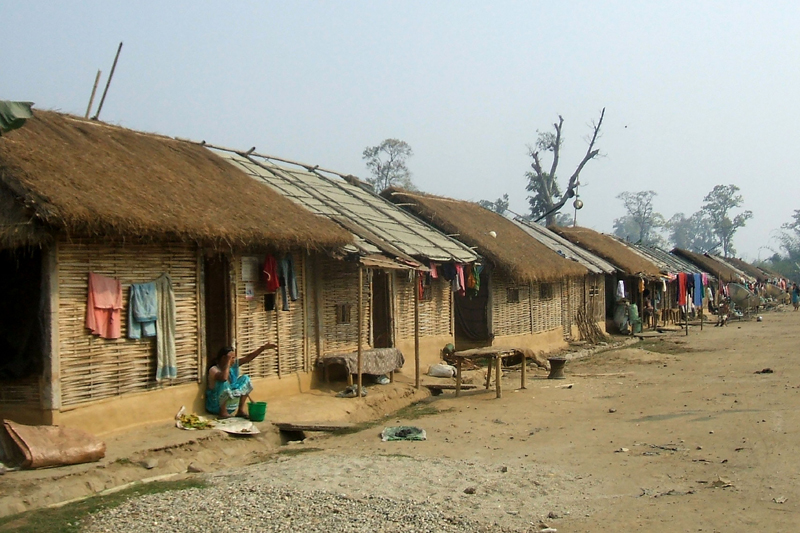
On the World Refugee Day on June 20th, a few articles appeared in the media about the Bhutanese refugees still remaining in the camps in Nepal and about the ordeals faced by the refugees before they were settled in third countries.
There are still 7000 and odd refugees remaining in two camps in Beldangi and Sanichare. They were the ones who for a variety of reasons did not apply for resettlement in the hope that they will be repatriated to Bhutan and this also includes some who have been refused resettlement.
The UNHCR has already warned that it is in the process of shutting down the two camps though this does not appear to be imminent.
Of the 113,000 refugees who opted for resettlement, the bulk of them- 96000 have been taken in by the US and it is said that the US will not take any more of the refugees. While there is no information of those resettled elsewhere in Australia, Canada, Denmark, Netherlands, New Zealand, Norway and United Kingdom, there is some information about those in USA. While the first and the second generation are not happy having been uprooted from their cultural environment, it is those who were born in the camps and who have no idea of what southern Bhutan was like, have taken a liking to the new surroundings, learning new skills and have generally adapted themselves.
It was nice that some of the refugees who have done well financially in their new environment have made a call to help other refugees with whatever contributions they can make towards their cause.
In the beginning of this year, there were reports that Nepal has desired for further talks with Bhutan over the repatriation of the remaining refugees still in the camps in Nepal.
Earlier there were 16 rounds of bilateral talks between the two countries over a period of 20 years and the talks yielded nothing. In fact, the Joint Verification had identified after verification of over 12,000 refugees in the Khudenabari camp, of over 200 refugees as legitimate citizens of Bhutan having valid documents coming under Category I. Even among these not one of the refugees was taken back to Bhutan.
In fact the bilateral talks and the joint verification team stopped verification abruptly in 2004 on a small incident where the Bhutanese team was said to have been attacked by the refugees. The provocation of course was from the Bhutanese officials of the joint verification team.
The composition of the remaining 7000 and odd refugees still in the camps is not known. It is said that it consists mostly of elderly people and children. Full details should be available with the UNHCR.
What is known however is that the Nepal government has categorically declined to absorb the remaining refugees in Nepal itself. This is rather unfortunate although this appears to be the best solution to those still remaining in the camps. If these refugees – some may be of political parties too- are hoping to return to Bhutan with dignity- it is not likely to happen.
As I had predicted right in the beginning many-many years ago, Bhutan is unlikely to take even a single refugee back from the camps and this stalemate will continue. There is no country in the World including India which can pressurize Bhutan to take back the remaining refugees! It is unfortunate and unfair too. But this is the reality.
It is said that Nepal is reluctant to absorb the remaining refugees as this may encourage Bhutan to drive away the remaining 80,000 Lhotsampas still living in southern Bhutan. This is not true.
The worry for Bhutan is the “ethnic imbalance” that will be created with southerners growing at a faster pace and overwhelming the other two indigenous northern communities.
This happened in Sikkim where the Nepali community had completely overwhelmed the Lepcha and Bhutia communities.
It looks that Bhutan is comfortable with the present ethnic proportion and so may not move for further reduction of Lhotsampas!
What is unsaid and perhaps forgotten is the presence of a large number of unregistered southern Bhutanese in India, mostly in Assam and West Bengal and perhaps widespread all over India. It is also said that some of the elderly persons who were resettled elsewhere in third countries may have quietly retuned to India.
Estimates vary as to many belong to this category in India. It could be anywhere between 15,000 to 30,000. These consist of three categories.
1. Those who came directly from Bhutan to India unnoticed by the Indian security authorities and have quietly settled down with the help of their relatives.
2. Those who stayed in the camps for a while and left for India after getting disenchanted with life in the camps.
3. Those who were not considered for resettlement and thus trapped in the camps.
These refugees have no refugee status and have been living on the margins of the society without citizenship and without any legal status.
These poor refugees are likely to be exploited by criminal elements if it had not happened so far. India should take the responsibility and initiate steps to regularize their stay and give them a “life with dignity”. This is the least India can do for the unfortunate people- refugees of Bhutan who were driven out of their homes and forced to live a life of anonymity!
(SAAG) -
Corruption: Don’t anger the people to take action themselves
BY D. M. THAPA
It would be like repeating a much used cliché similar as trodding upon a worn out threadbare carpet, to say that, “Nepal is a very corrupt country”. But even such a threadbare carpet has been even more soiled, uncared for and trampled by privileged persons and bureaucrats who came to power along with the political parties in what they reverently call the “Dawn of Democracy” here. The people expected real freedom, and they got something like that in political terms, but nothing else!
Not that corruption did not exist before, it did, but not in such a blatant and almost vulgar manner. Some people in power got very rich during the times of the kings as well and it was during the time of late king Birendra, who appointed a cunning man like Surya Bahadur Thapa as Prime Minister, that ministers and bureaucrats took advantage of the comparatively open situation and corruption started to flourish in the name of protecting the panchayat political system. But the floodgates really opened after the revolution of 1990 when the king was stripped of most of his power and political parties took over the reins of ruling the country. The situation never abated from this time.
People coming from far off villages, just because they belonged to one political party or the other started getting rich first. Naturally, their close family members and supporters also joined in. as did the bureaucrats and also police personnel who were supposed to maintain law and order in the country. As late Girija Prasad Koirala ruled the nation for the longest period after the “ushering in of democracy”, he must be blamed for letting things get out of control. A person who many times said he would “finish off” the communists from Nepal, saw many of his ministers go to jail also, but he was instead almost finished off by the communists, that also communists who had started a ten year old armed insurgency which caused much killing of innocent people and destruction of property. You cannot forget to add the displacement of hundreds of thousands of people from their original homes, who sought safer havens in the city areas. It is not for nothing that it has taken years for the war to be forgotten and the wounds to heal. But the very people who started the insurgency have not only gotten rich enormously, but they are also in power in the present government. “I am not afraid to go to the Hague, Prachanda, the leader of the insurgency said publicly on different occasions recently. “I will become a bigger hero and the world will recognize me as a harbinger of peace and a person fighting for justice, he further said. Though he seemed to be in a downcast mood, even as made these bold, but unbelievable statements.
Naturally many debates took place but, one person, who tried to talk of what the kings, specially king Prithvi Nrayan Shah and late king Mahendra had done for the country, was rudely cut-off by the anchor of the programme and he started a discussion with his own guest! That is the type of partisan journalism I have written about many times in the past in this very column.
But to come back to corruption, though I have no inside knowledge about these things nor am I connected with powerful agencies, I have come to be aware that corruption seems to be taking place in every government office and elsewhere. I read news about such things in different newspapers and also see the same on TV.
The problem is so rampant that even a stand-up comedian said in one of his jokes how he would buy all open spaces in Kathmandu, including the Airport and the historical Tundikhel, when he became rich. When a person asks him how can he do such a thing like buying government land, he satirically gives the punch-line by saying, “If others can buy land belonging to the Prime Minister’s government owned official residence, why can’t I do the same?”
Accumulating land, no matter in which part of the City, no matter to whom the land belongs to, nor how small it may be, at least compared to the land transaction that has taken place in Baluwatar, where the official residence of the PM is situated, has become a source of huge income for the so called “land mafias”, in cahoots with corrupt officials of the Land Revenue, Land Reforms and Survey Department offices, with constant backing of banks. There is virtually no one who can control, them and many innocents have suffered because of such individual’s greed for even more money. There was a front-page news in a vernacular daily how a sitting Judge of the Supreme Court was involved in buying and selling land that belonged to one of the main culprits of the Baluwatar land scam who runs a highly popular supermarket at Bhatbhateni and in many other parts of the City.
This is just one tiny part of the corrupt practices taking place in the country. As reported in popular newspapers, from businessmen cheating the government billions of rupees in taxes while producing and selling beer, to influential politicians becoming millionaires overnight, policemen from top to bottom taking direct bribes, bureaucrats not agreeing to sign one document or the other unless they get hefty commissions and in the purchase of goods for government institutions, all work is done swiftly when and amount has been agreed upon. But the majority of people with no “source-force”, has to pay through his or her nose just to get a simple service done. He or she has to go through the rigmarole of swindlers, “land mafias” cheating businessmen and government officials involved. In some cases one must also be mentally prepared to pay money and even get insulted or put in jail by the police. Only some “analysts” make very logical and balanced comments about such ethical crimes which may be making a small percent of people richer, but which is virtually squeezing the country dry.
Such a situation cannot go on forever, a time will come when things will snap and innocent people who cannot make ends meet even for day to day survival will take up arms exactly like the Maoists did over a decade back. Heaven forbid that such a time will come again and no Nepali can feel safe in their own country and he or she cannot trust anybody else. We have seen such events taking place in many other parts of the world now, and a person like Donald Trump, the President of USA, many European countries and even India and China are making a play-field of smaller and poorer nations just to get their vested interests fulfilled. The death and destruction we are seeing is really heart wrenching. The thing to be worried about by all, including the corrupt politicians, bureaucrats, greedy businessmen and those willing to dance to foreigners, is that, will Nepal also be pushed into a similar situation? Many may have to perish like in other countries when power, money and land may by of no use to them even if they can flee this otherwise beautiful country and live a hidden life as a “third class” citizen in some other nation!. -
Nepal and China ideal partners in development
BY LEELA MANI PAUDYAL

The picture shows China-assisted Ring Road upgrading project in Nepal. [Photo/Xinhua]
Nepal and China established diplomatic relations on Aug 1, 1955. Ever since, the successive leaderships of the two countries have cultivated bilateral relations for mutual benefit.
Nepal and China also share common aspirations for peace, prosperity and development, and enjoy good neighborly relations based on the five principles of peaceful coexistence. Amity, goodwill, sincerity, and trust are the hallmarks of our bilateral relations.
Nepal remains firm in its one-China policy, while China has remained a major development partner of Nepal including in the fields of infrastructure, transport, energy, health, education, reconstruction and human development.
China has made great strides in economic development and social transformation, including poverty alleviation. Thanks to its development, China has also made great contributions to the world economy. It has also been playing a significant role in shaping the global agenda for peace and development. Further, China has offered to share its expertise and resources with developing countries for common benefit. Which will greatly help a country such as Nepal.
The two countries’ history of interactions and exchanges is long. Scholars such as Buddha Bhadra of Nepal and Faxian and Xuanzang of China linked the two countries through philosophical exchanges from the 5th to the 7th century. Nepalese artistes contributed to painting one of the world’s most precious grottoes, at Dunhuang in Gansu province, in the 8th century. And Araniko and his team built several stupas and Buddha’s images in China, including the Great White Pagoda (Bai Ta Si) in Beijing and Shanxi province in the 13th century.
Our relations have continued to deepen and expand over centuries, and gained further momentum after the establishment of diplomatic relations in 1955. Bilateral ties reached a new height in April last year when President Bidya Devi Bhandari paid a state visit to China in April. Apart from meeting with President Xi Jinping, she witnessed the signing of important bilateral agreements including Transit Transport Protocol and cooperation in quality standard. She also took part in the Second Belt and Road Forum for International Cooperation, which issued a statement for jointly developing the Belt and Road Initiative that reflects Nepal’s development aspirations.
China was the top source of foreign direct investment in Nepal, and the second-largest source of tourism last year. And with several agreements and memorandums of understanding signed to deepen Sino-Nepalese cooperation, 2018 was a significant year for strengthening overall bilateral relations.
In recent years, the Nepalese government’s most urgent task has been to build institutions, set development goals and mobilize resources to achieve them. Nepal has initiated various reform measures to attract investment and foreign technology in order to meet the development aspirations of the Nepalese people. The government has set development targets for building major infrastructure, including railways, roads and airports.
While Nepal is using internal resources to the maximum to realize those goals, the support of friendly countries and the international community will be of crucial importance to Nepal’s development endeavors. In this respect, Nepal’s cooperation with China is of great value and substance. Since China has the experience of lifting more than 700 million people out of poverty and realizing fast-paced economic development, it is an important partner-in-development for Nepal.
The two sides have been working closely to develop infrastructure and improve connectivity. For diversifying and boosting land-locked Nepal’s international trade, transit, investment and tourism, railway connectivity is of vital significance. Also, Nepal has not been able to fully tap the huge potential of hydropower, new energy, agriculture, and herbal and traditional medicine-areas in which China has enormous expertise, and therefore the ability to support its neighbor. And since Nepal’s socio-economic uplift would contribute to regional growth and stability, Sino-Nepalese development cooperation is a win-win proposition.
China advocates equality, inclusive development, multilateralism, and a rules-based world order. Similarly, Nepal supports multilateralism, and economic cooperation that is just and inclusive, and attributes responsibility to a country according to its capacity. Nepal and China are ideal development partners, for they are committed to fulfilling the aspirations of their peoples, and building a just, inclusive and peaceful global order.
(The author is ambassador of Nepal to China.)
(China Daily)