Author: people

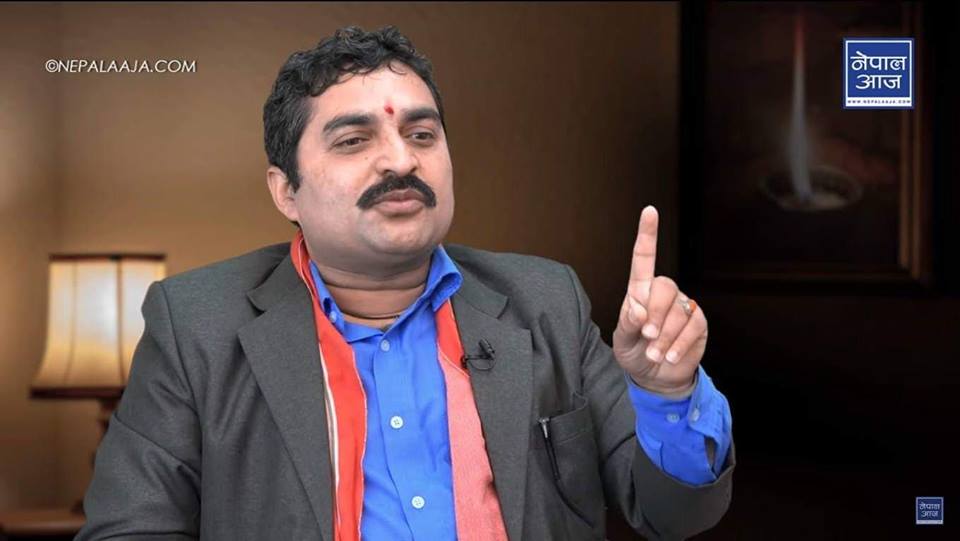
  • We are practicing kleptocracy in the name of loktantra: Rajesh Ahiraj

    We are practicing kleptocracy in the name of loktantra: Rajesh Ahiraj

    Rajesh Ahiraj is the only Nepali scholar who has done Ph.D. on “Madhesh Movement and Madheshism”. Ahiraj, is the editor and publisher of the Madhesh Vani vernacular weekly and also known as an intellectual representing the Tarai community. Ahiraj has completed his LLB course from the Nepal Law Campus before doing his Ph.D.
    Born in Rautahat, he later migrated to Sharlahi. Ahiraj is one among the strong critic of the present political leaders who are involved in the Tarai based politics. Ahiraj talked to People’s Review on contemporary political issues in the country. Excerpts of the interview given below:

    Q. You are known as an intellectual and also an active journalist representing the Tarai community in Nepal, but you are a strong critic of those political leaders who are doing politics in the name of the Tarai community. What could be the reason?

    A. In this 21st century, there is no space for doing politics in the name of class, caste, ethnicity, religion etc. Instead of resolving issues, these leaders are found only running to get to power by giving continuation to the issues by pushing the country towards more conflict. Look at the past Madheshi uprisings, the major concerns raised by the Tarai people were education, health facilities, good roads, irrigation, development, employment and such things. And the Tarai leaders became ministers and got the very portfolios related to the Tarai people’s demands in the government, but the problems faced by the Tarai people were never resolved. Those who became the leaders and ministers after the Madhesh movement were reluctant to resolve the issues of the Tarai people when they were in power.
    I have been unable to find three things among the Madheshi leaders – their base, their views and their attitude.

    Q. Were they comparatively corrupt when they were in power?

    A. They practiced corruption as retailers not as whole-sellers.

    Q. You are against the reservation policy guaranteed by the constitution. Why?

    A. Only a healthy society can make a healthy nation. Poverty, unemployment, illiteracy are not related to castes. Opportunity too is not related to castes. Such reservation policy will discourage the hidden capability of an individual and those who score 90 percent, will remain unfit for jobs, whereas, those who just bag 40 percent, will get the opportunity. Reservation policy will not contribute in making the nation prosperous.

    Q. You are against the federalism that the country has adopted. What is the reason?

    A. Federalism cannot be considered as an achievement. There are different systems in the state mechanism. Of late, Nepal has adopted federalism. First of all, we don’t need federalism. If someone cannot stay without federalism, then, just three provinces having borders with both India and China are enough.
    We don’t need federalism just to provide jobs to the political leaders or to practice corruption or to destroy ethnic harmony in the society. In a country like Nepal, one nation, two political parties and three provinces are more than enough.

    Q. Where is the Tarai politics heading towards?

    A. People from all the 77 districts are suffering from poverty, illiteracy, unemployment and most of all corruption. Among them, the Tarai people are comparatively in a better situation to protest against the government on these issues. The Tarai people have participated in the uprisings that took place in Tarai. However, the political leaders have always exploited the Tarai people. After the 2006 Tarai unrest, above 70 leaders of the Tarai centric parties have become ministers. What did they do to uplift the Madheshi people when they were in power? This is a burning question in the Tara districts. Earlier, there was unity among the Tarai people. Today, this has ended. The society has been divided on the issues of higher caste and lower caste, religion and such things.

    Q. From the eye of a journalist, how do you see the situation of the country?

    A. There is a serious lack of independent journalism, instead, I see 99 percent journalists are practicing partisan journalism only. Journalists carry either the ideology of the political parties or the agendas of those who have sponsored them. Our media has not been able to play the role to link Jumla with Janakpurdham and connecting people from Rautahat to Rolpa. The people from Rautahat don’t know that people in Rolpa are dying even due to lack of a basic medicines and the people from Rolpa don’t know that those people in dhoti are also Nepali citizens. Journalists didn’t play the role to link people from different societies and cultures. Journalism has played a negative role in the Nepali society.
    In your other query about the country’s situation, what I see is that the definition of democracy has been changed. The new definition is “by the leaders, for the leaders and to the leaders”. We are practicing kleptocracy in the name of loktantra and we are heading towards civil war. Day by day, the population of poor people is increasing. Politics has been criminalized. If such a trend will continue for the next 4/5 years, we may witness a civil war in the country.

    Q. You are actively involved in the Campaign of Nepali for Motherland. In fact, what is this?

    A. Still, there is a large number of the Nepali citizens who want to see Nepal as a prosperous nation, they want to see Nepal under the control of the Nepali people and not under the control of the foreign powers; the government servicemen should serve the Nepali people and Nepali citizens should stay in the country with pride and glory. There are hundreds of thousands of people within and outside the country who want to see Nepal as a prosperous nation, but they have not joined any of the political parties due to the attitude of the political leaders. Our campaign is to develop a common forum for those hundreds of thousands of Nepalis who love Nepal and who have pride in being a Nepali.
    Yes, constitution is needed for a nation but a country has not been constituted just for a constitution. If a constitution will try to discriminate the citizens, then the constitution will invite confrontation. The present constitution of the country has identified different classes of people – women, ethnic, Madheshi, untouchable, etc. We want only one caste or race in the country, which is Nepali. We believe, then only, we can develop a prosperous and common Nepal of all the Nepalis.
  • Massive misuse of PM’s employment programme fund

    Massive misuse of PM’s employment programme fund

    By Our Reporter


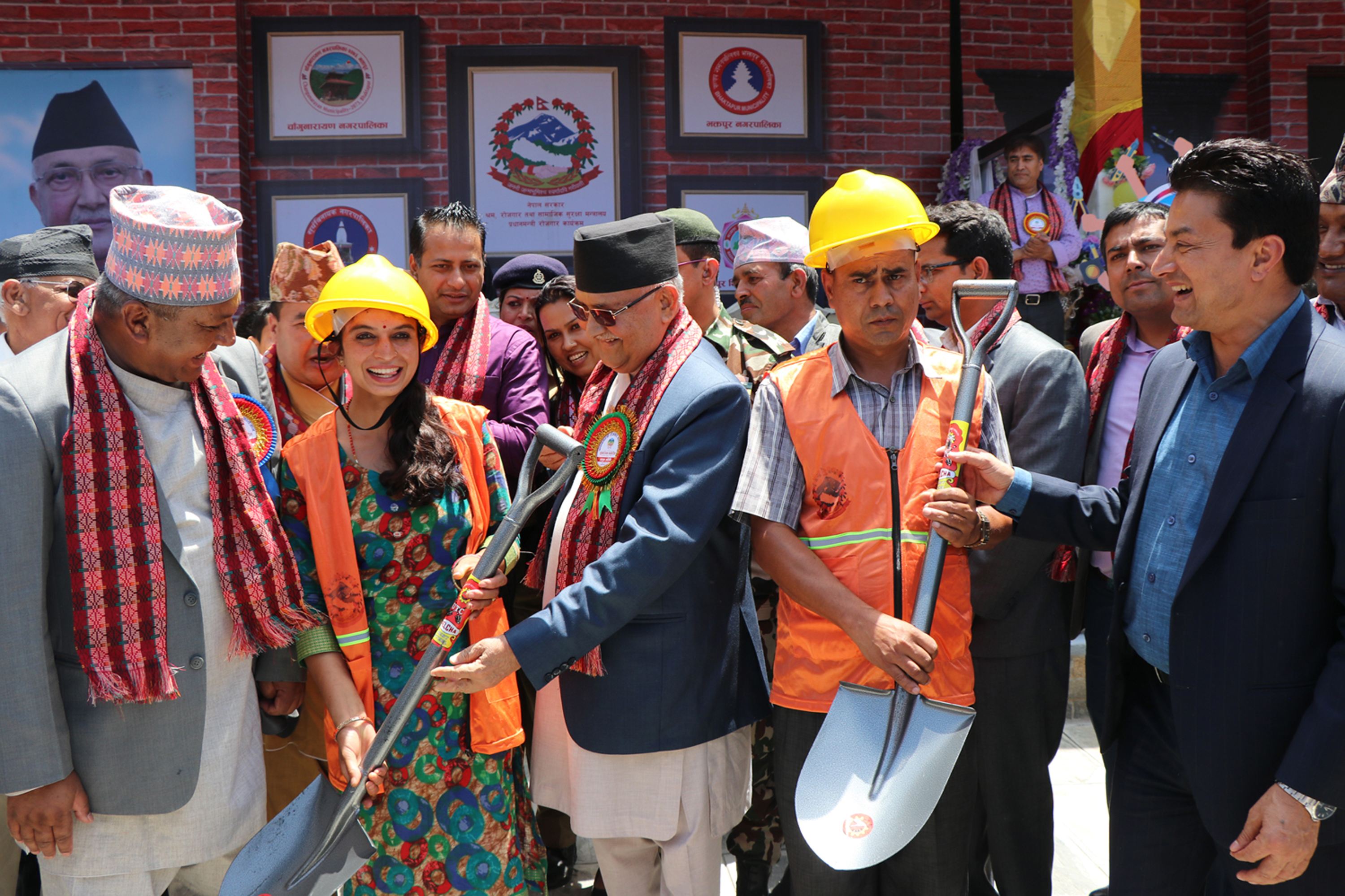
    Everyone knows well that the fund of the Prime Minister Employment Programme was misused massively across the country with the local levels appointing their men in manual work like sweeping the read and cleaning the drains.

    Moreover, in many places only the unemployed persons loyal to the ruling parties got the job. As a result, the programme drew massive criticism not only from the opposition parties but also from public.
    According to the government, the Prime Minister Employment Programme (PMEP) provided employment opportunities to 179,909 people.
    Minister for Labour, Employment and Social Security Gokarna Bista said in a press meet that he PMEP grabbed the attention of a large number of people despite some criticism.
    Bista further said that as the government has now appointed employment coordinators in most of the local bodies, the programme will certainly move ahead in a full-fledged manner from the ongoing fiscal year.

    The government is also mulling over receiving loan from ADB to give continuity to the controversial programme.
    As per the ministry, PMEP beneficiaries carried out 2,262,269 days of work through 6,864 community works (projects) that mounted to Rs 2.37 billion in the last fiscal year.
    As per data released by the ministry, one jobless person received employment for an average of 13 days through the programme and received Rs 13,460.
    While the programme was announced through the budget of fiscal 2018-19, it was finally implemented on February 12. The government had allocated Rs 3.10 billion for the programme in the last fiscal.
    The government has allocated Rs 5.1 billion for PMEP for this fiscal.

  • NC leaders settle the general convention date dispute

    NC leaders settle the general convention date dispute

    By Our Reporter
    The Nepali Congress, which has, of late, become a victim of incompetent leadership, has finally managed to sort out the differences among the factional group regarding the date of the party’s 14th general convention until for November.
    According to routine, the 14th general convention of the old grand party should be held by March 2020. But the establishment faction of the party led by its president Sher Bahadur Deuba has been trying its best to postpone the date by one and a half years citing the provision of its statute.
    Obviously, party president Sher Bahadur Deuba, who is responsible for the eroding popularity of the party, want to regain his strength in the party by postponing the general convention. But two other factions led by senior leader Ram Chandra Paudel and Krishna Prasad Sitaula as well as the leaders from the Koirala family want that the general convention should be held in March next year.
    The rival faction and the members of Koirala family want to oust Deuba from the leadership at the earliest through the general convention. Many NC leaders, cadres and well wishers wanted an early exit of Deuba right from the day the final results of 2017 elections were made public, because they blamed Deuba for the humiliating defeat of the party in the Federal parliament and state assemblies in all seven provinces.
    The NC that was in power till th2 2017 elections has now only 65 members in the powerful 275-member House of Representatives while it has negligible members in the assemblies of all seven states. And the voters of NC blamed Deuba for the shameful defeat of the party due to his unpopular activities before and during the elections.

    Many had expected that Deuba would step down moral ground for the defeat, but he did not. The leaders demanded for early general convention which Deuba thwarted on the basis of majority he enjoyed in the party’s central committee. And now, efforts have been not to let Deuba lead the party for more than his eligible four-year term of the party president.
    However, again Deuba seems to have won the battle,because holding general convention four months in four months of the announcement of the convention date is impossible. When the party decided to fix the general convention date in November, holding the general convention in March next year looks almost impossible.
    It is not known what made the rival factions to agree to announce the convention date only in November, the party is sure to suffer more because every move of Deuba ends in controversies.
    Announcing convention date had become a issue of dispute in its recent protracted central committee meeting. However, the rival factions agreed to finalise the general convention date by November this year after preparing party structure based on the federal setup.

  • Disturbed and embarrassed Prachanda

    Disturbed and embarrassed Prachanda

    By Our Reporter
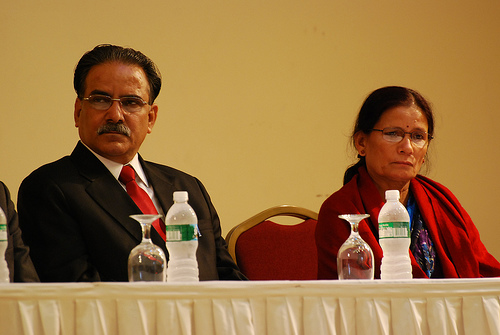
    CPN co-chairman Pushpakamal Dahal “Prachanda” seems to be mentally disturbed due to different reasons. Firstly, he is embarrassed and disturbed from his own family. His wife Sita has been sick for a long time and there is no chance of recovery of her health unless a miracle. Prachanda, to satisfy Sita, had to travel to the US. To make her happy, Prachanda planned a family trip to Dubai and stayed at a very expensive hotel there. His affection and love for Sita could be very sentimental, but he is being criticized for staying at an expensive hotel in Dubai. Sarcastic comments on different social networks reflect the people’s fury against him.
    Just recently, Prachanda unnecessarily made a remark against former King Gyanendra by saying that if the former king will not correct himself, he will be forcefully ousted from the Nagarjun Durwar.
    Prachanda has blamed the former King for going against federalism, secularism and republicanism. Prachanda’s recent remarks have been condemned by a large section of the general public. This can be a revelation about Prachanda’s declining popularity among the Nepalis and the former king’s growing popularity.
    The other example for Prachanda being mentally disturbed is that he blamed a section of the people who want to send him to the Hague. Furthermore, he said, he will become an international hero if he will be sent there.
    Due to the fear of arrest, the then Maoist leaders are escaping their European tours.

  • TU officials shared among former CPN-UML and Maoist Centre

    TU officials shared among former CPN-UML and Maoist Centre

    By Our Reporter
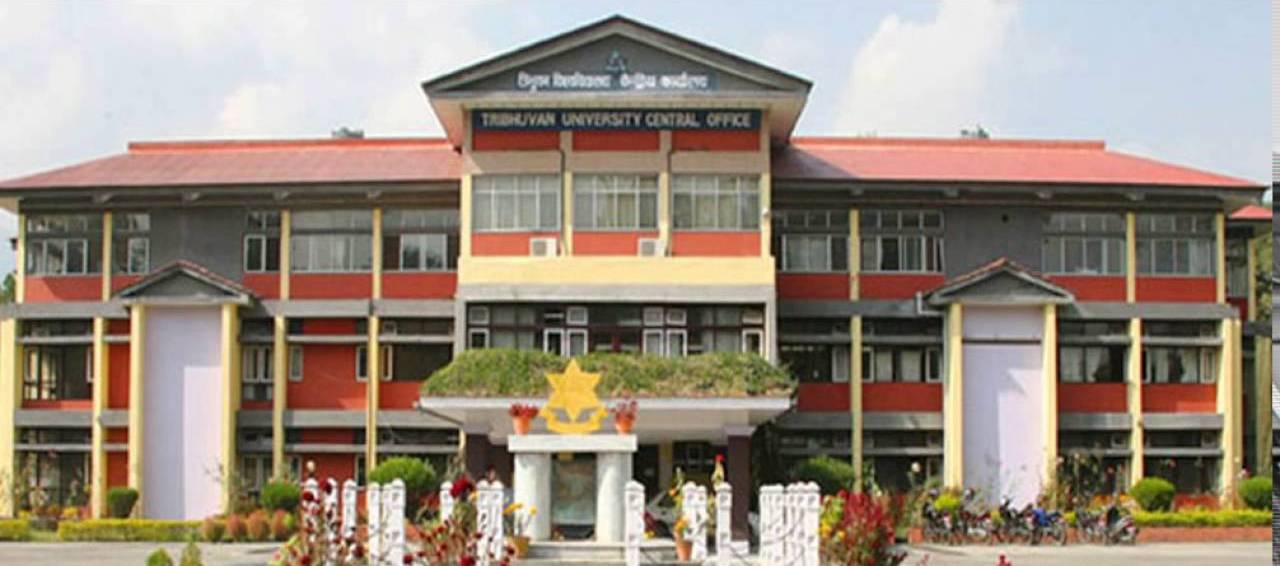
    The government has again divided the posts of Tribhuvan Universities among the factions of the ruling Nepal Communist Party (NCP) even though voices were being raised to free the universities from political influence.
    Despite the recommendation of the parliamentary body to appoint independent academic personalities in the universities, the government has divided the posts among the groups of the ruling NCP, clearly suggesting that the government does not seem to have taken the recommendation seriously.
    The government had received a report from Education and Health Committee of the parliament and another from the Higher Education Committee. Both the committees recommended the government for appointing officials through open competition, not on the basis of political affiliation of the persons.
    The parliamentary committee asked the government to appoint education expert, experienced professors and politically unaffiliated academic personality as chancellor, vice-chancellor, rector, registrar and other officials. The committee also recommended operating universities as free and autonomous organisations.
    Likewise, the committee also recommended forming an independent Teachers’ Service Commission of universities.


    Similarly, the government-formed Higher Education Commission had also suggested forming a board of trustees to operate the universities. A board of trustees is an appointed or elected group of individuals, and it has an overall responsibility for the management of an organisation. But the government has outright denied the recommendation and gave continuity to political appointment in universities.
    It was evident from the appointments of Prof. Dr. Lalu Prasad Paudel to the post of the chairman of Tribhuvan University Service Commission and of Prof. Dr. Hemraj Dhakal as its member. Paudel represents the former CPN-UML and Dhakal former Maoist-Centre.
    The posts had remained vacant after the former chair and members were suspended for their involvement in irregularities during examinations taken to a member of TU service commission.
    There are still high chances of making appointments of academicians loyal to the ruling and powerful political parties who are in the race to be officials by the government even in this time.
    The government has formed a committee to recommend the names of Vice Chancellors, but the committee members are also close to the ruling Nepal Communist Party.

  • BABBLES

    Biratnagar Jute Mills

    These days, there is a Left government and the board directors of the Biratnagar Jute Mills were appointed by the very Communist government. Those directors, who were assigned to run the factory, have already disposed the factory’s machines/equipment at a very low price and now they are developing a plan to capture the valuable land belonging to the Mill. The land is priced at billions of rupees, therefore, the board directors have found developing a plan not to run the factory, but to capture the valuable land owned by the factory.
    The Mill is a factory having historical significance but the corrupt people are trying to dispose this historic asset of the country, just like others have done in different other government institutions. It is reported that even the land of Sajha Yatayat was trying to be turned into private property of a certain person who looked after the organization.

    Minister Raghubir Mahaseth

    Minister for Physical Infrastructure and Transportation, Raghubir Mahaseth himself is a businessman. He is one of the major share holders of the Lhotse Multipurpose Company, which has captured the Gangabu Bus-park, the property of the Kathmandu Metropolis Corporation.
    The Lhotse Company has constructed a business complex in the bus-park premises, which is against the agreement it signed with the Municipality.
    What to do if the minister of a strong government is concerned with his business! The CIAA has also given consent on the illegal structure inside the bus-park.

    Where is Budhigandaki project?

    The Electricity Authority paid 22 billion rupees to its Indian counterpart for the use of electricity in Nepal. We could save such a huge amount of money if we had thought about producing electricity from our rivers.
    Prime Minister KP Sharma Oli, with the commitment of constructing the Budhigandaki reservoir model project by the government itself, had started to collect five rupees from each litre of petro-products.
    The Nepali people, consumers of petro-products, without any objection, are paying the Budhigandaki tax even today. But when the government is going to start construction of the project, we don’t know. Timely construction of the project would end Nepal’s dependency on electricity with India.
    Perhaps the government authorities could be aware that without construction of reservoir projects, we cannot be self reliant on electricity. Since the construction of the Kulekhani hydropower project, no other reservoir project has been constructed. The benefit of the reservoir project is that during the dry season, we can get electricity as well as water for irrigation. But as we have relied on all the run of the river projects which are generating electricity, during the dry season, we have acute shortage of electricity and during the rainy season, we have a surplus of electricity. To balance the electricity demand, we need reservoir projects like Budhigandaki.
    Whether we are keen to permanently end shortage of electricity and permanently end the import of electricity from abroad, no one has any idea!

  • PM Oli off to Singapore, Prachanda to Dubai

    PM Oli off to Singapore, Prachanda to Dubai

    By Our Reporter
    Prime Minister K P Sharma Oli is now in Singapore for a routine health check-up. He left for Singapore on Sunday.
    Likewise, Pushpa Kamal Dahal, one of the chairman of the ruling Nepal Communist Party arrived in Kathmandu after concluding his six-day Dubai visit.
    Overseas trips of the two chairs of the ruling communist party NCP, has however, drawn criticism from public stating that they were blowing the money for their pleasure.
    Criticism on the PM’s Singapore was so severe that Minister for Communication and Information Technology had to clarify by holding a surprise meeting on Sunday that the state would not spend any money for Prime Minister Oli’s Singapore trip.
    He organised the press meet on Sunday to make the Cabinet decision public instead of organising it on Thursday, the regular schedule, only to succor public criticism.
    Minister Baskota said all the expenses will be borne by PM Oli himself.
    The personal secretary of PM Oli also said that he had gone for a regular check-up at National University Hospital in Singapore.

    Oli had kidney transplant in New Delhi in 2007.
    Doctors attending the prime minister had referred him to the National University Hospital in Singapore. An ultrasound-guided renal biopsy was conducted a few days ago on Oli to test the functioning of his kidneys.
    He is going to Singapore not because he is sick, but because he has to undergo a routine check-up, said Kundan Aryal, PM Oli’s press adviser.
    After his kidney transplant, Oli had regularly undergone routine health check-ups in different countries.
    Likewise, Dahal had been to Dubai with his ailing wife and two daughters.
    Theirs was a family visit to console Sita, who is diagnosed with progressive supranuclear palsy.
    Dahal was received at the airport by Energy Minister Barsha Man Pun, Tourism Minister Yogesh Bhattarai and Drinking Water Minister Bina Magar.

  • NC, RJPN end House obstruction

    By Our Reporter
    The Nepali Congress and Rastriya Janata Party-Nepal, which had been obstructing the meeting of the House of Representatives on Monday agreed to end the obstruction.
    In the meeting on Monday an agreement was reached to resume the House without further obstruction and to make it more effective, Rojnath Pandey, Spokesperson for the Parliament Secretariat, said.
    The House meeting was halted on July 10. Except for the meeting on July 24, which discussed an urgent motion of public importance related to floods and landslides in the country, no meeting had been possible due to obstruction. The meetings were either obstructed by the opposition or postponed with notices issued by the Parliament Secretariat.
    Opposition parties had insisted that a panel be formed to investigative two alleged cases of extrajudicial killings in Sarlahi district.
    The House resumed after the government agreed to form a parliamentary special committee to prevent such obstructions of the House in future.
    The committee — formed under the coordination of Nepal Communist Party (NCP) leader and former Speaker Subash Chandra Nembang — will give advice based on the country’s constitution and regulations to avoid such disruptions in House proceedings.

  • By election in November

    By Our Reporter
    The government has decided to hold by-elections on November 30.
    Minister of Communications and Information Technology Gokul Prasad Baskota informed this while addressing a press meet organised at Singha Durbar on Sunday The decision was taken on August 1.
    The election will be held in at least 50 seats, which have remained vacant since the previous polls held in 2017.
    The by-election will be organised for a seat of the House of Representatives which had remained vacant after the demise of Rabindra adhikari.Likewise,the people will elect three state assembly members, one mayor of sub-metropolitan city, three chairs of rural municipalities, one deputy chair of rural municipality and 41 ward chairs.
    The seats have remained vacant in the last two years.

  • SSB stops Nepali from constructing home in Nepali soil

    By Our Reporter
    Indian security force SSB a few days ago entered Nepal and stopped work on an under-construction house of Bangden Bhote of Suryodaya Municipality-2.
    They also prevented Nepalis from walking along the Charmail route to reach an Indian market. They also stopped the construction of view tower in Sandakpur, one of the tourist destinations of Nepal.
    These are a few representative incidents in which the SSB has interfered in the daily activities of Nepalis in Nepal.
    Of late, the Indian security force has started entering Nepal and torturing the Nepalis.
    “I stop constructing my home after SSB told me to do so,” Bhote said.